What Is a Next-Gen E-Commerce Platform? 8 Features That Matter in 2026
Next-gen e-commerce platforms combine AI search, real-time inventory, headless storefronts and automation. Here is what the term really means, the features that matter and how to decide whether you need one.
"Next-gen e-commerce platform" is one of the most overused phrases in retail technology. This guide cuts through it: what the term actually means, the eight capabilities that separate a modern commerce platform from a basic online store, and how to decide whether you need to upgrade.
What is a next-gen e-commerce platform?

A next-generation e-commerce platform is an online selling system built for real-time, multichannel commerce. Beyond a product catalog and checkout, it adds AI-driven search and personalization, live inventory across every channel, a fast and flexible storefront, built-in automation and unified analytics, all connected through open APIs.
The label matters less than the outcome: shoppers find the right product faster, stock is accurate everywhere you sell, and your team spends its time on growth instead of manual order work.
8 features that define a next-gen e-commerce platform
1. AI-powered search and recommendations

Search that understands natural language ("black running shoes under $100") and recommendations based on browsing and purchase history. For stores with large catalogs, better search and recommendations are usually the fastest way to lift conversion and average order value.
2. Real-time, multichannel inventory

One source of truth for stock across your website, marketplaces such as Amazon, social shops, wholesale and physical stores. Without it, you oversell, cancel orders and lose repeat customers.
3. Headless or composable architecture
The storefront (what shoppers see) is separated from the commerce engine (products, carts, orders) and connected by APIs. That gives you full design freedom and faster pages, and lets you plug in best-of-breed tools for search, content or payments instead of being locked into one vendor.
4. Fast, mobile-first performance
Most e-commerce traffic is mobile, and slow pages cost sales. Modern platforms serve pages from a global edge network, optimize images automatically and keep checkout to as few steps as possible.
5. Flexible checkout and payments

Digital wallets, buy-now-pay-later, subscriptions and local payment methods, including cash on delivery in markets such as Bangladesh and parts of the Gulf. The right payment mix depends on where your customers are.
6. Built-in automation
Order routing, fraud checks, shipping labels, customer notifications, returns and reporting run automatically. Workflow tools such as n8n connect the store to your ERP, CRM, warehouse and messaging apps so orders never need re-keying.
7. Unified customer data and analytics

Customer profiles, orders and marketing data in one place, so you can segment customers, personalize campaigns and see margin and lifetime value by channel instead of stitching spreadsheets together.
8. Open APIs and integrations
Well-documented APIs and webhooks let you connect any tool you need and build custom features without fighting the platform. This is what makes the other seven features possible.
Do you need a next-gen platform? A quick checklist
Signal | What it usually means |
|---|---|
You oversell or cancel orders because stock is out of sync | You need real-time multichannel inventory |
Staff copy orders between the store, ERP and courier tools | You need integrations and automation |
Shoppers can't find products with on-site search | You need AI-powered search |
Your theme blocks the experience you want to build | Consider a headless storefront |
Mobile pages are slow and mobile conversion lags desktop | Performance work or a new front end |
You can't see profit by channel or customer | You need unified data and reporting |
Upgrade, extend or replatform?

Most growing brands don't need to replace their platform. Extending Shopify, WooCommerce or a similar system with the right apps, integrations and automation covers most of the features above at a fraction of the cost. Replatforming makes sense when your catalog, pricing rules or B2B needs have outgrown what the platform can model. A headless build makes sense when brand experience and speed are central to how you compete and you have the budget to maintain it.
How Ryven helps e-commerce brands

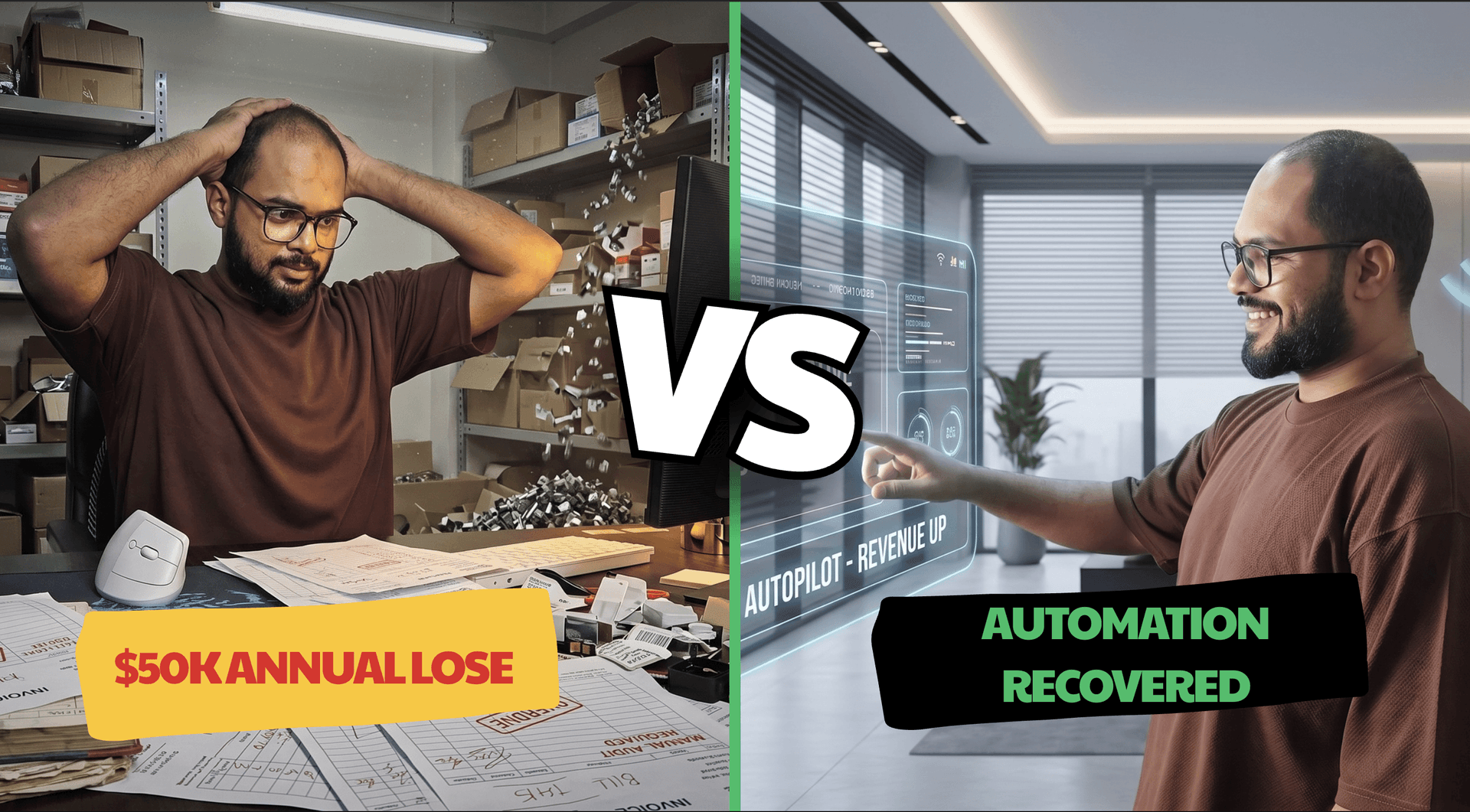
Ryven builds and extends e-commerce platforms for brands in the US, UAE, UK and Australia, from Shopify builds and custom storefronts to inventory sync and order automation. See our e-commerce development services, read why mid-market brands lose $50K+ a year to manual processes, or book a free consultation.